
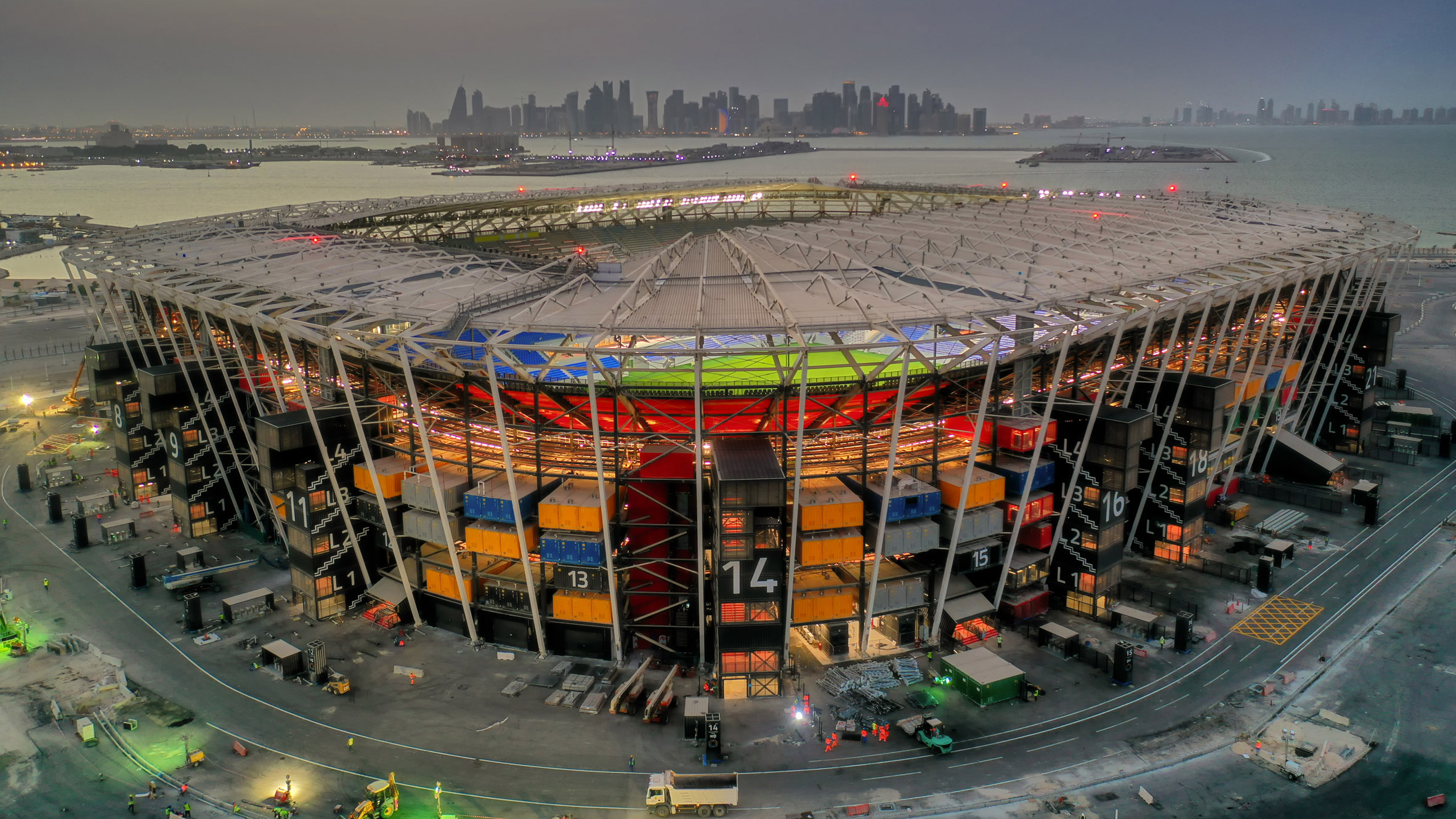

In recent years, sports stadiums have rapidly evolved into showcases of environmental innovation....
The message at this year's Music Sustainability Summit was uncomfortable, direct, and necessary: we are not doing enough, and we are not moving fast enough.
Held on April 14th at Solotech Studios in Los Angeles, MSS26 brought together artists, venue operators, tour managers, promoters, and suppliers for a full day of sessions under one shared premise — that the music industry has the will to change, but hasn't yet found the speed.
We were there. Here's what we took away.

Events can have a major ripple effect in the global sustainability movement
Greening the live events industry would on its own have a major global impact but what is perhaps most underestimated is the ripple effect we can drive from within it.
Think about what a live event actually is: a temporary city, assembled and dismantled in days, drawing thousands of people from dozens of zip codes, powered by a supply chain that spans catering, logistics, energy, construction, and waste management. More than 145 million fans attended Live Nation events worldwide in 2023 alone Sustainability Magazine — that's 145 million touchpoints with sustainability in action, or inaction.
This is precisely what makes events such fertile ground. Unlike a factory or an office building, a live event is inherently public, emotional, and shared. When an attendee watches a venue compost food waste, takes a free transit pass to a concert, or chooses a plant-based meal because it's the most visible option on the menu, that behavior doesn't stay at the venue. It travels home with them. It shows up in how they talk to their employers, their cities, their families.
Events can function as a global highway for climate innovation, rapid experimentation at scale, with a built-in audience of millions ready to be inspired. The solutions we prove here, in arenas, convention centers, and festival grounds, lower the barriers to adoption for every other sector watching. If we get this right, we're not just greening an industry. We're demonstrating what's possible for the world.
Food Is a Low-Hanging Fruit We Keep Ignoring

One of the most powerful moments of the day came from Maggie Baird, founder of Support + Feed. Baird founded Support + Feed with a vision to work at the intersection of the climate crisis, food equity, and food insecurity, scaling its impact through partnerships with music artists, including Grammy Award-winning artists Billie Eilish and Finneas. Her message was simple: food is one of the most powerful and most accessible levers we have.
Eating a plant-rich diet is one of the most powerful actions an individual can take to reduce their climate impact. The data backs this up. A vegan diet can cut carbon emissions by 46% and land use by 33%, while vegetarian diets cut carbon emissions by about 35%. At the event scale, the numbers are even more striking: if 10,000 concertgoers take a 30-day plant-based pledge, that alone saves 7 million gallons of water.
At Envire, we're taking this seriously. We introduced our food impact reporting at Earth Day luncheon with Society for Sustainable Events during SF Climate Week — and we'll be publishing the full findings on Global Meeting Industry Day, May 6th. Food is one of the low hanging fruits.
The Venues Are Ready — So Why Are We Still Moving This Slowly?
We heard from some of the biggest names in venue and live event management, including Legends Global, AEG, Oak View Group, and Live Nation. Every single one has implemented sustainability programs. Every single one understands the importance of data driven action today and have also developed internal tools for measurement tasks.
The honest answer isn't lack of will. It's friction. Sustainability teams are under-resourced, reporting is still manual and time-consuming, and without standardized data, it's nearly impossible to demonstrate ROI to executives or drive systemic accountability across supply chains. Removing that friction and making sustainability the path of least resistance is precisely what we're building at Envire and why we are collaborating with existing initiatives, such as Net Zero Carbon Events.
Creative Solutions for Attendee and Fan Travel Emissions
REVERB, which oversees tour sustainability for major artists including Billie Eilish, brought one of the most creative and actionable ideas of the day: rewarding fans who take group transit with free concert passes, and distributing free public transit passes to attendees, something I already saw years ago at business conferences in Europe during my planner days. Small incentives, big behavioral shifts.
REVERB also challenged the room to start by simply measuring fan travel impact, one of the most notoriously difficult categories to track, currently relying almost entirely on attendee surveys. You can't improve what you don't measure and this is the first step before carbon offsets and the future with sustainable aviation fuel (fortunately in development by a few companies like Neste, a Finnish chemistry company that made a complete pivot from oil products to renewable diesel and sustainable petrol, and a growing number of research projects). Until new chemistry innovations or electric airplanes hit the market, the best we can do is to measure and offset.
The AI Conversation Is Missing Something Important
There was a lively discussion at MSS26 about the role of AI in sustainability, but one thing was conspicuously absent: the conversation about how AI itself is built and deployed.
We're in a moment of enormous enthusiasm for large language models (LLMs), and rightly so. But an LLM is often overkill for the task at hand. Simpler, lower-power AI approaches, such as rule-based systems, lightweight classification models, or small fine-tuned models, can accomplish most sustainability data tasks at a fraction of the energy cost. The choice of architecture matters too. Serverless platforms like AWS Lambda use 55% less energy than traditional virtual machines, and research indicates serverless computing can reduce carbon emissions by 77% compared to traditional cloud deployments, simply by not burning energy on idle resources. Sounds familiar from cars, except after years with U.S. the Department of Energy’s Clean Cities Coalition, I can confidently say that it’s easier to control machines than driver behavior.
If we're going to use AI to solve the sustainability crisis, we should hold the AI itself to the same standard.
The Takeaway
The music industry is further along than most. The conversations at MSS26 were sharp, honest, and driven by people who genuinely care. But there's a gap between caring and changing and that gap is largely operational. Better data, embedded workflows, and layering sustainability with everyday work tasks are what closes it.
Globally, live concerts and festivals generate up to 5 million tonnes of CO₂ per year (best estimate with the data we have today). That number won't move through good intentions alone. It will move through infrastructure — the kind that makes sustainability invisible, automatic, and inevitable.
That's what we're building. We'd love to build it with you.
Interested in joining the Envire platform or our Carbon Coach testing cohort? Reach out to johanna@envire.ai.