


Sustainability was not just a talking point at IMEX America 2025. It was the backbone of the show....
Sustainability is no longer an add-on to events, it is becoming a core component of how experiences are designed, executed, and measured.
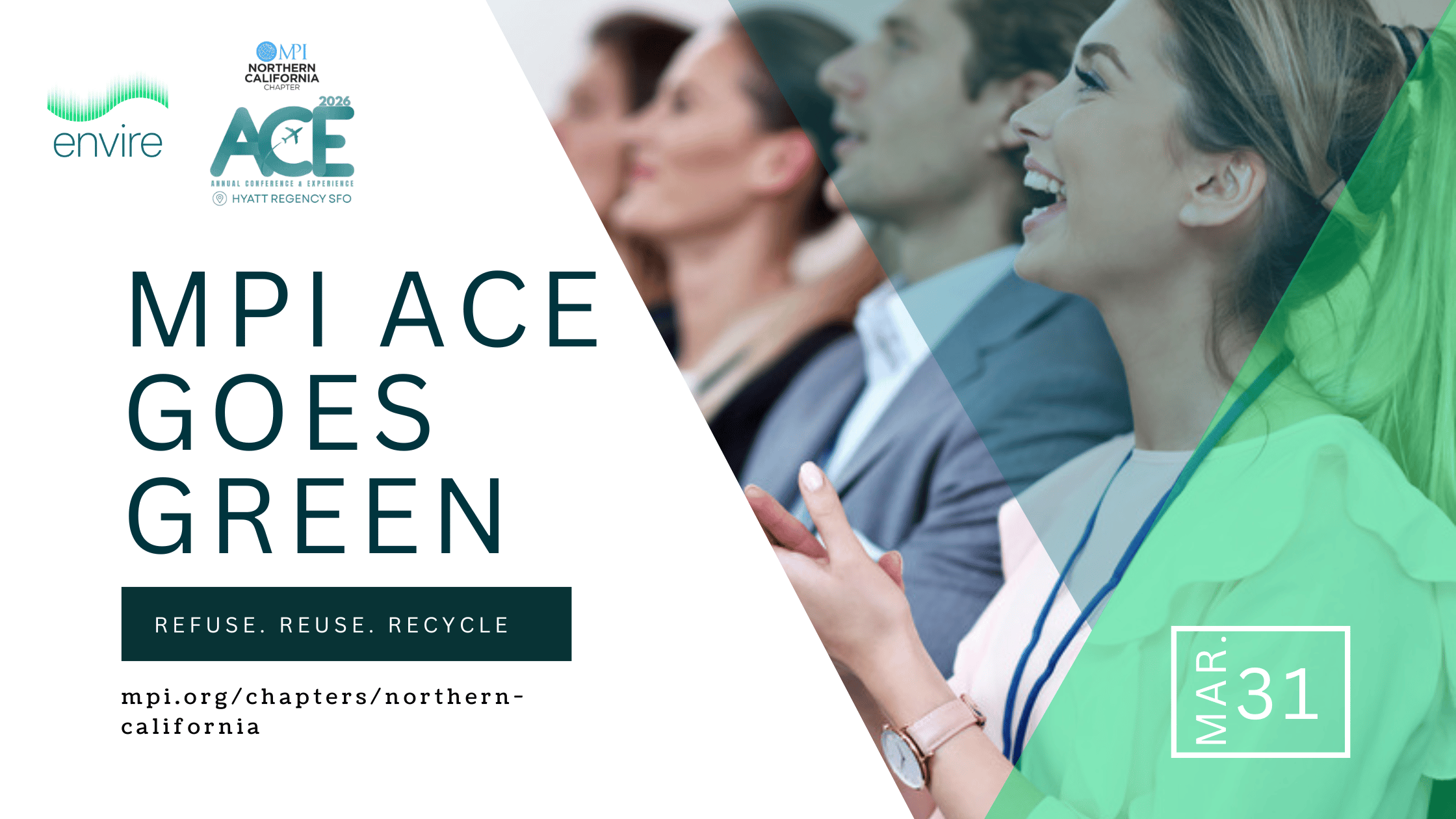
At MPI’s ACE 2026 Summit hosted at the Hyatt Regency SFO Airport, sustainability is embedded into operations across travel, food recovery, waste management, and energy efficiency. The approach demonstrates how live events can reduce environmental impact while enhancing attendee experience and operational transparency.
This year’s summit goes beyond the traditional conference format. Attendees engage in hands-on learning, interactive discussions, and dynamic sessions focused on innovation, collaboration, and professional growth — all while applying practical sustainability strategies in real time.
Low-Carbon Travel and Carpooling
Transportation typically represents one of the largest emission sources associated with live events. Encouraging shared mobility options is a simple and effective way to reduce this footprint.
Attendees are encouraged to use the carpool program through the designated app platform Crewz.com to connect with other participants and share rides to and from the venue. By reducing single-occupancy vehicle trips, the event lowers overall transportation-related emissions.
Beyond the environmental benefit, carpooling also creates early networking opportunities. Conversations often begin before arrival and continue throughout the summit, strengthening professional connections in a natural and collaborative way.
Small behavioral shifts in travel choices collectively create measurable emission reductions when adopted at scale.
Low-Waste Hydration
Single-use plastic bottles remain a common source of waste at conferences and large gatherings. Reducing reliance on disposable packaging significantly improves waste diversion outcomes.
To support low-waste hydration at ACE:
- Water stations will be available across meeting floors
- Reusable glassware will be provided onsite
- MPI reusable bottles will be available for purchase
- Exhibitors and attendees are encouraged to bring their own drinkware
Providing accessible hydration alternatives removes barriers to sustainable behavior. When reusable systems are convenient and visible, participation increases.
The goal is to normalize reusable infrastructure as part of standard event operations rather than treating it as an optional sustainability feature.
Waste Sorting and Responsible Disposal
Effective waste management depends on clarity, signage, and participation.
At the summit, attendees will find clearly labeled recycling and waste bins in public areas along with event-specific pop-up sorting stations inside meeting rooms. These systems are designed to reduce contamination and improve material recovery rates.
We ask participants to carefully read disposal labels before discarding materials and to seek guidance from onsite staff when uncertain. Even small errors in sorting can reduce recycling effectiveness, which is why education and awareness are critical components of successful diversion programs.
Clear communication combined with accessible infrastructure ensures that waste streams are managed properly and materials with reuse potential are recovered.
Food Recovery and Material Donation

Food waste remains one of the most impactful areas where events can create immediate environmental and social benefit.
For ACE 2026, food recovery is implemented in partnership with the host venue and local community organization Daily Bowl.
Key components include:
- Untouched replacement buffet items will be flash-frozen and donated through The Daily Bowl program
- Post-event reporting will summarize the number of meals diverted from waste and delivered to community partners
Instead of disposing of surplus food, usable items are redirected to support local families and community initiatives.
In addition, attendees and exhibitors can coordinate the donation of leftover materials. Items that remain usable after the event will be collected and stored for pickup by designated partners.
These systems ensure that resources are reused wherever possible and that excess materials create positive community impact instead of landfill waste.
Energy Efficiency at the Venue
Venue infrastructure plays a significant role in reducing operational emissions.
The Hyatt Regency SFO Airport incorporates building systems that automatically optimize energy performance:
- Motion sensors control lighting and HVAC systems
- LED lighting reduces electricity consumption
- Advanced automation adjusts energy use based on occupancy
- Smart monitoring systems track and manage performance across the property
These features minimize unnecessary energy use without requiring manual intervention.
Event organizers also contribute by keeping lights off in unused spaces and being mindful of equipment and display energy consumption. When venue technology and attendee behavior align, energy efficiency improves significantly.
Measuring Impact and Driving Transparency
Sustainability at ACE is not symbolic — it is measured.
Event-specific impact tracking includes:
- Electricity consumption
- Water usage
- Waste generation and diversion rates
- Gas consumption
- Food and material donations
Post-event sustainability reports will summarize key metrics and insights, providing transparency to attendees and organizers. This documentation helps identify improvement areas and establishes a benchmark for future events.
Visibility into environmental performance is essential for continuous improvement. When data is tracked consistently, stakeholders can make informed decisions and implement targeted interventions that reduce impact over time.
Why This Approach Matters
Sustainability at events is not about restriction, it is about system redesign.
Real progress starts with understanding the problem and understanding the problem stems from data. Without visibility into energy use, waste streams, procurement choices, and material flows, it is difficult to understand impact or identify meaningful improvement opportunities. Measurement creates accountability and enables informed decision-making across venue operations and event planning.
Today, capturing and analyzing this data is becoming more feasible. AI-enabled tools, automated data integrations, and workflow systems reduce the manual effort traditionally required for sustainability reporting. What once demanded hours of spreadsheet work can now be consolidated into centralized platforms that provide near real-time visibility.
When impact tracking is automated and embedded into existing systems, teams can focus on action rather than data entry. Insights translate directly into operational improvements — from optimizing resource consumption to improving waste diversion and supporting circular initiatives.
By integrating sustainable practices into planning and operations, events can:
- Increase attendee engagement
- Reduce operational inefficiencies
- Strengthen community impact
- Improve environmental performance
- Demonstrate industry leadership
MPI’s ACE 2026 Summit illustrates how collaboration between venues, organizers, suppliers, and attendees transforms intention into measurable action.
When sustainability becomes embedded into event infrastructure and workflows, it shifts from aspiration to standard practice — supported by transparent data and scalable technology.